
Naam-Naqsh
Make the script personal.
Visitors trace their name in Urdu on paper over an illuminated surface. Letterforms become something to follow by hand and take away.
Interactive Discovery Pavilion · Jashn-e-Rekhta
Trace a name. Dial a poet. Step into a photograph. A pavilion that turns language and poetry into experiences people can touch, hear and share.
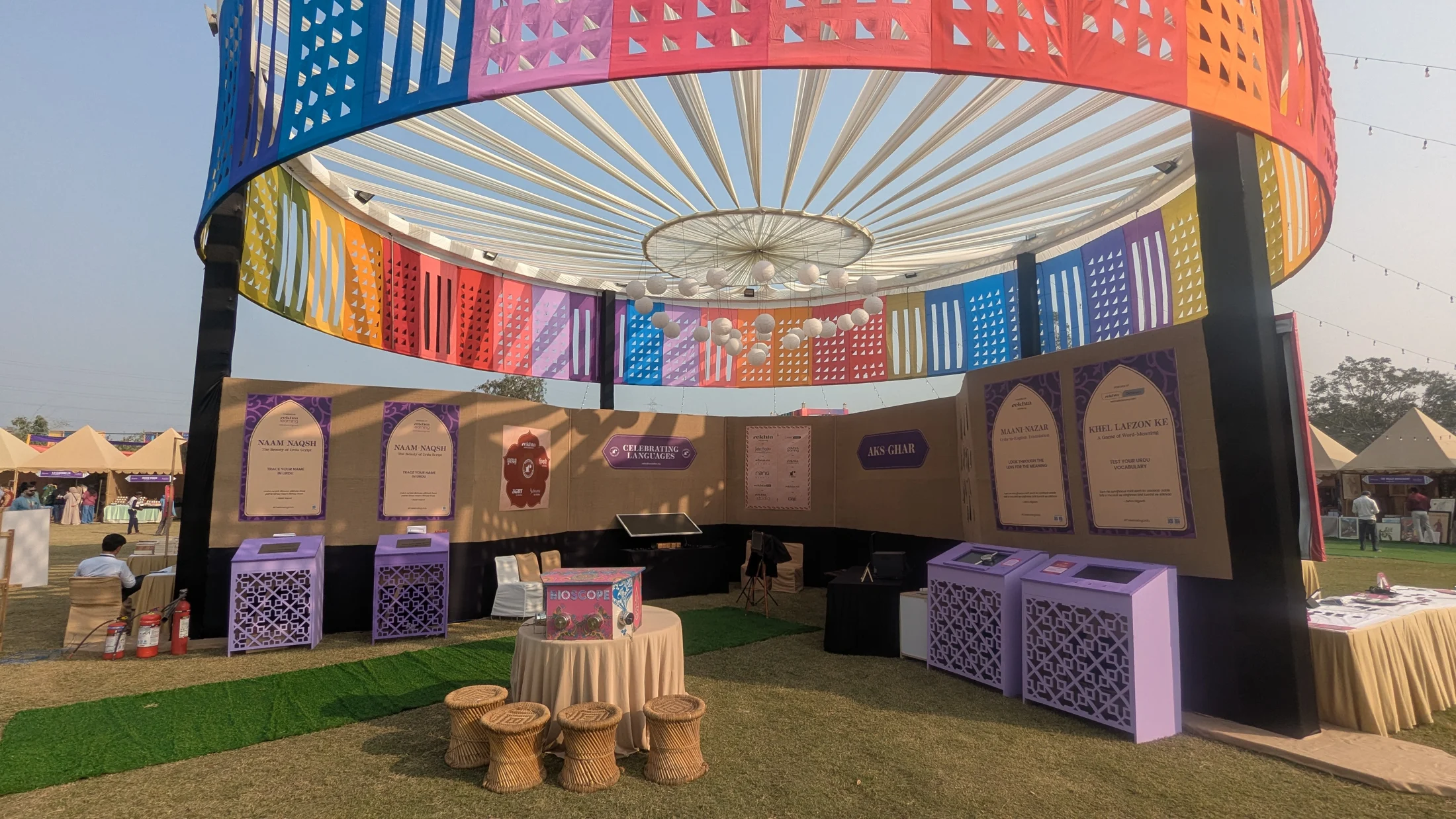 The pavilion
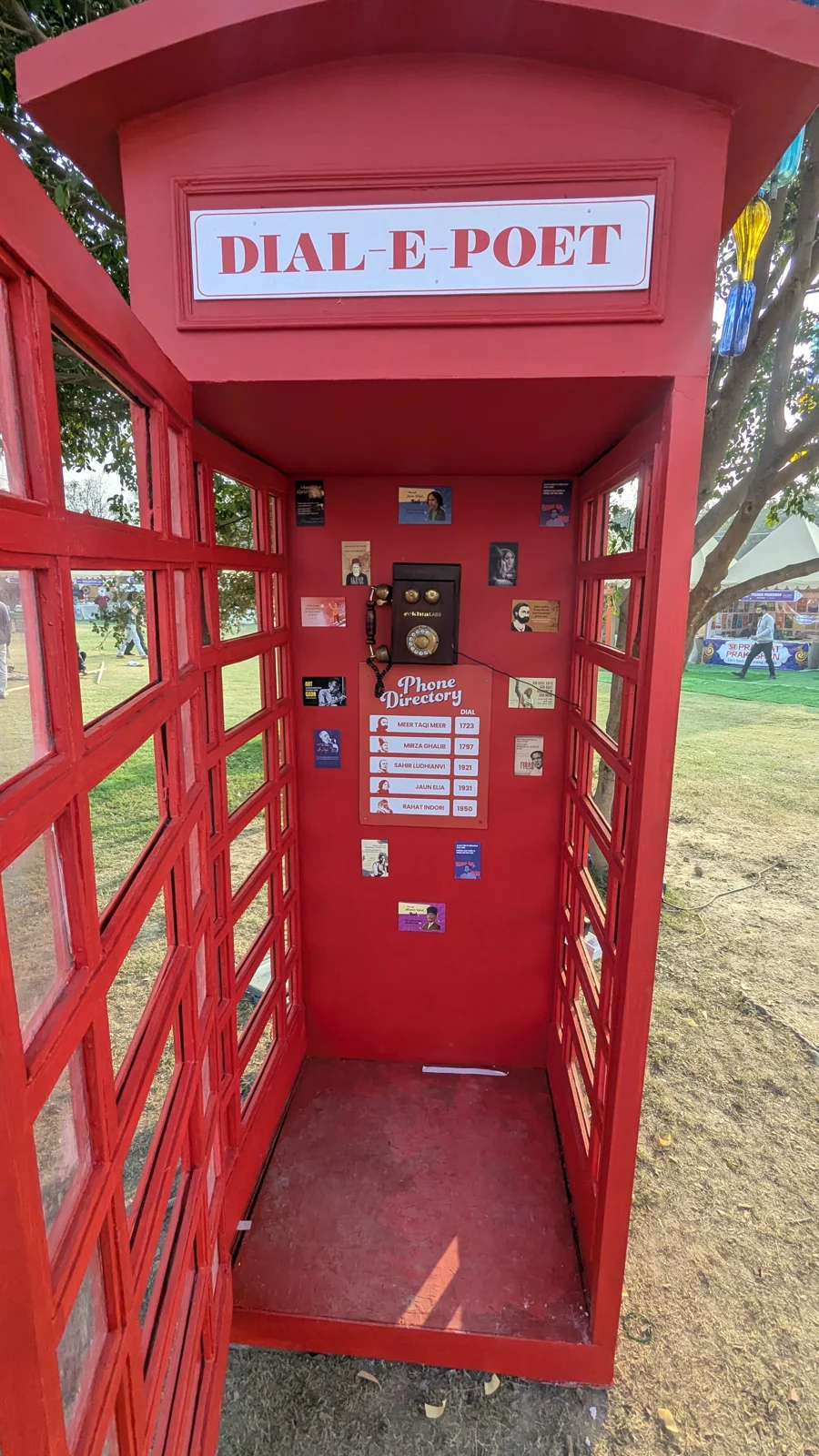 Dial-e-Poet
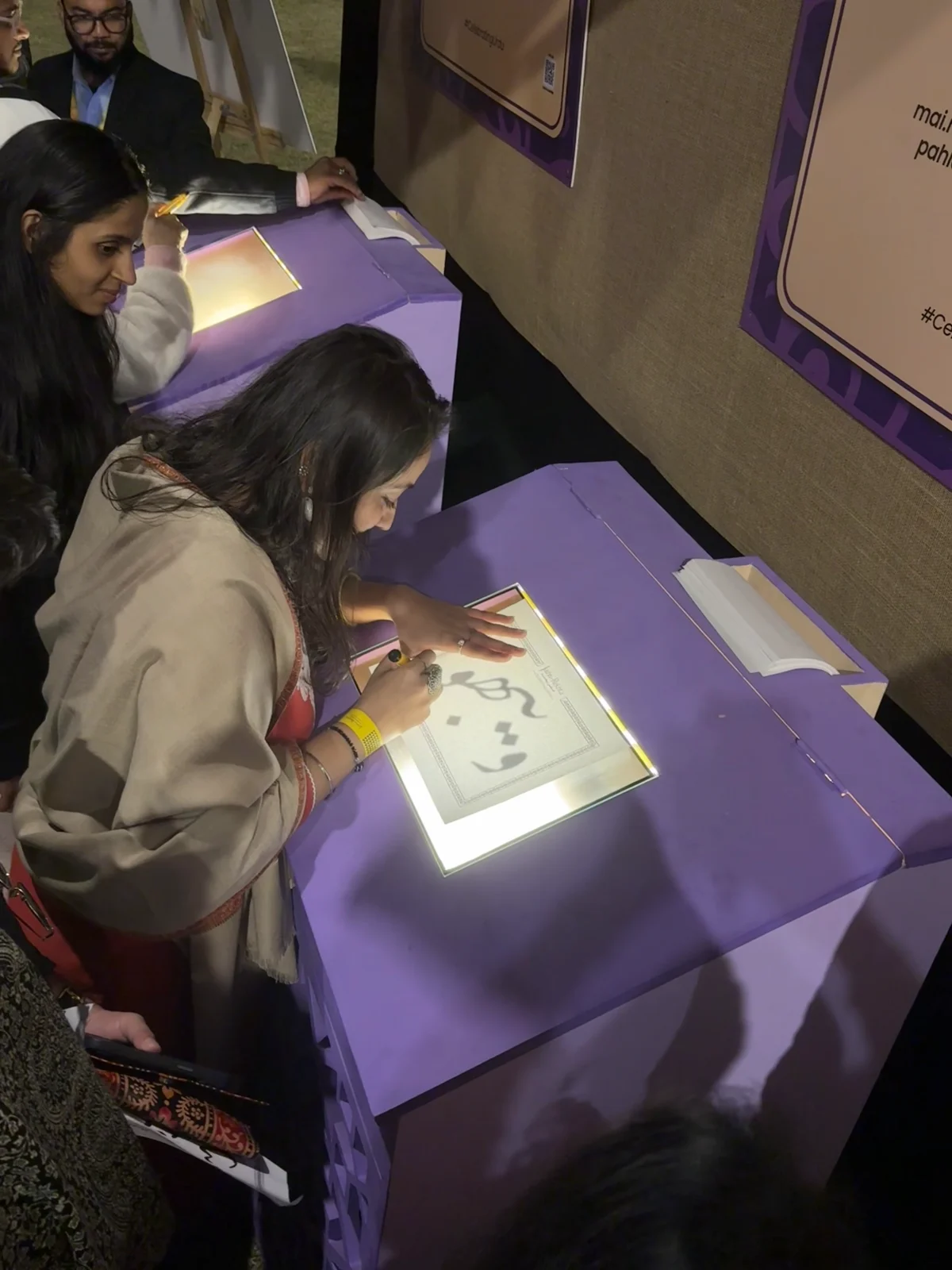 Naam-Naqsh
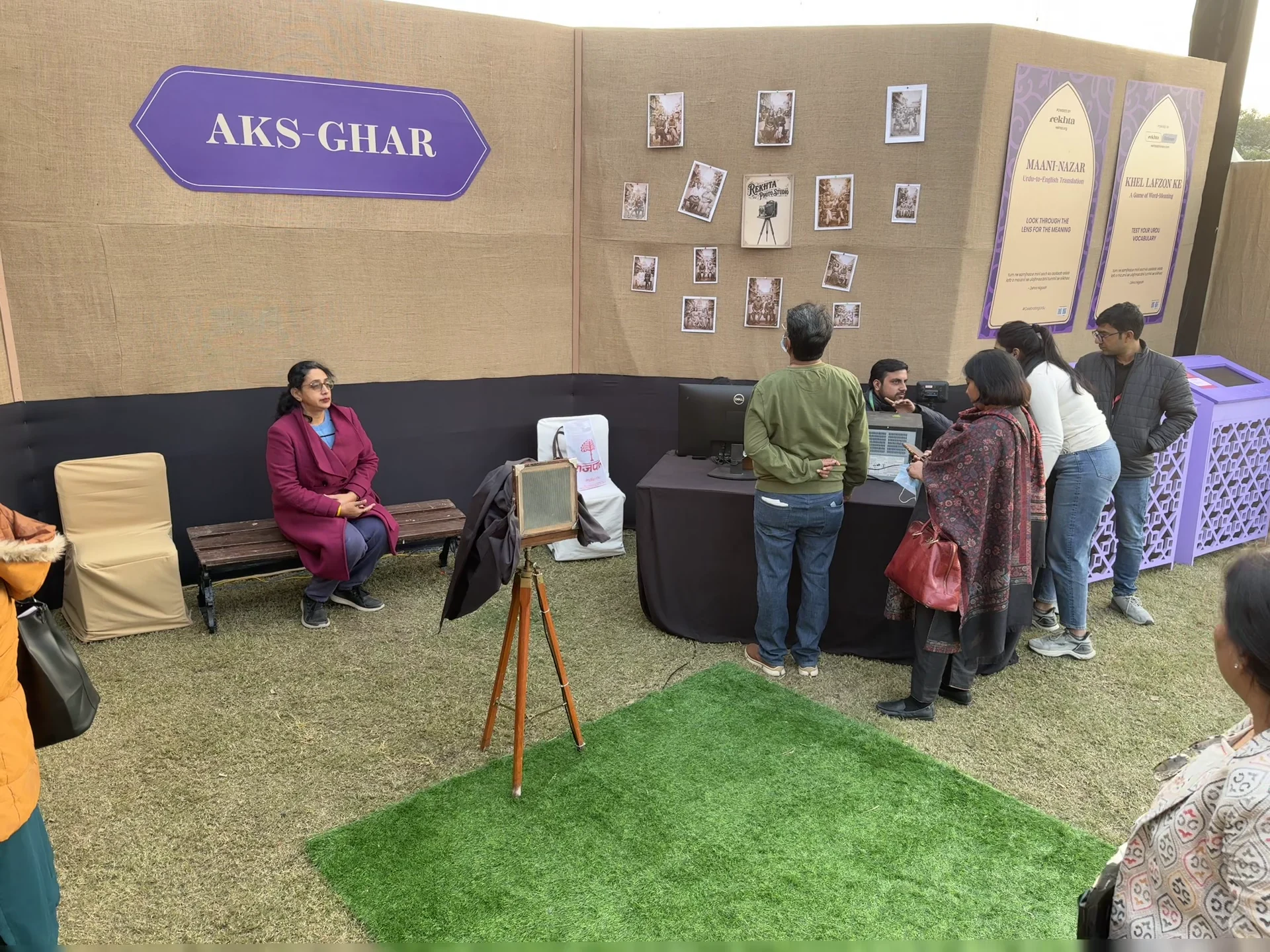 Aks-Ghar
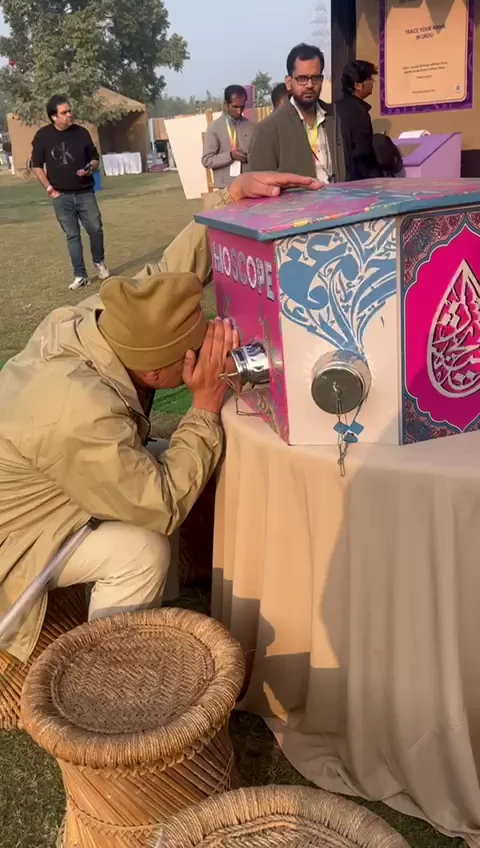 Bioscope
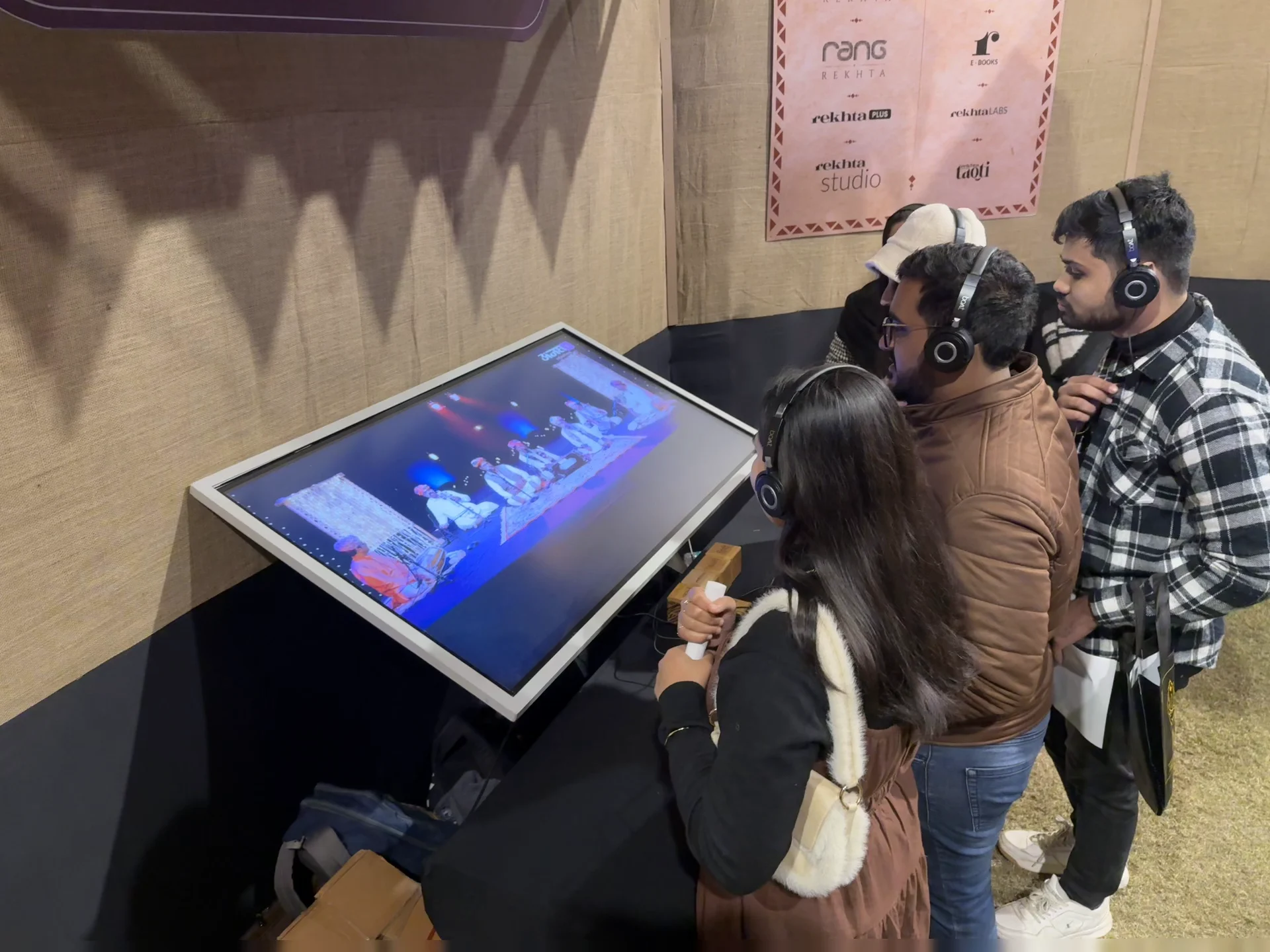 Shared listening
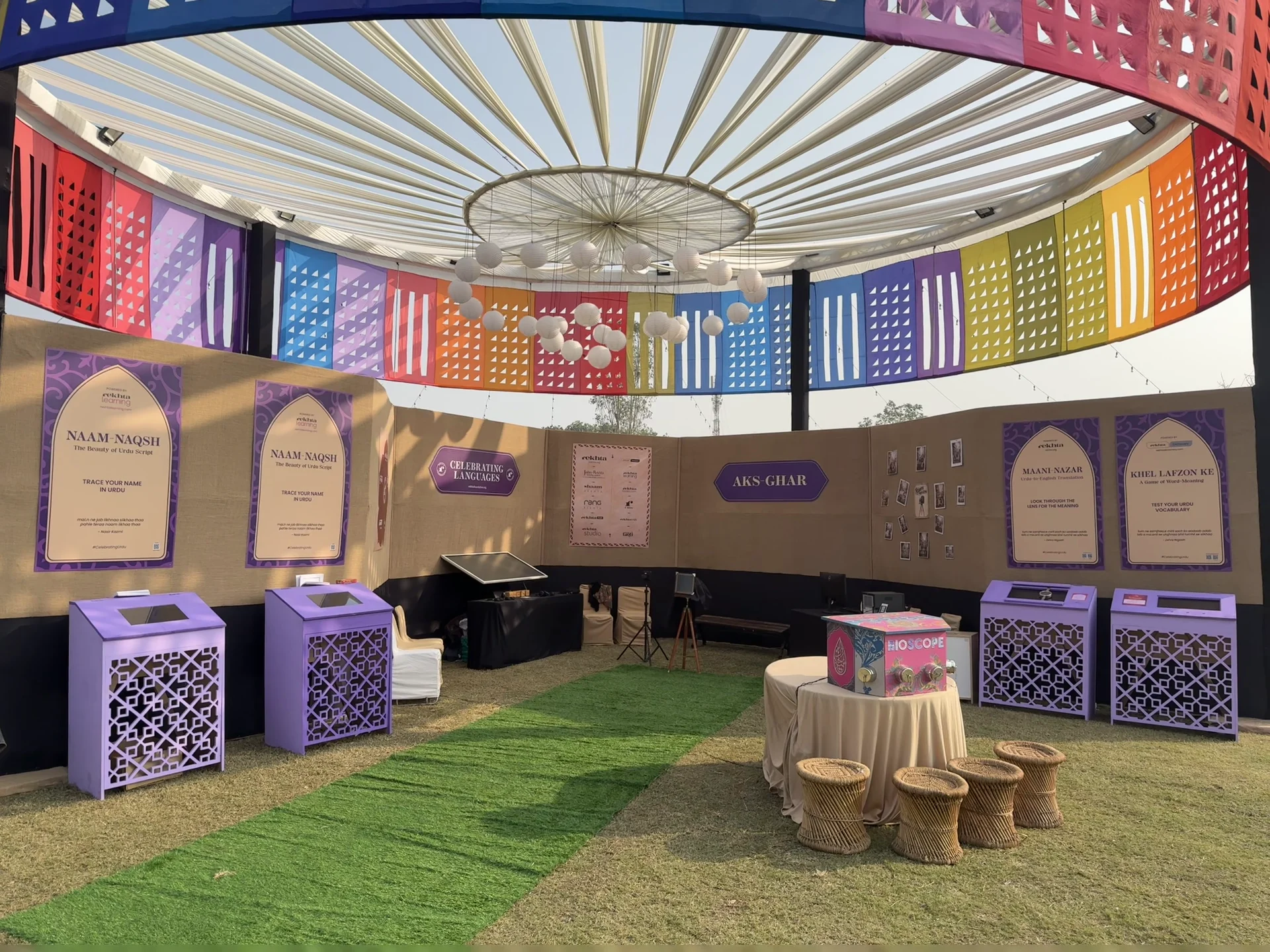 Words, meanings and play
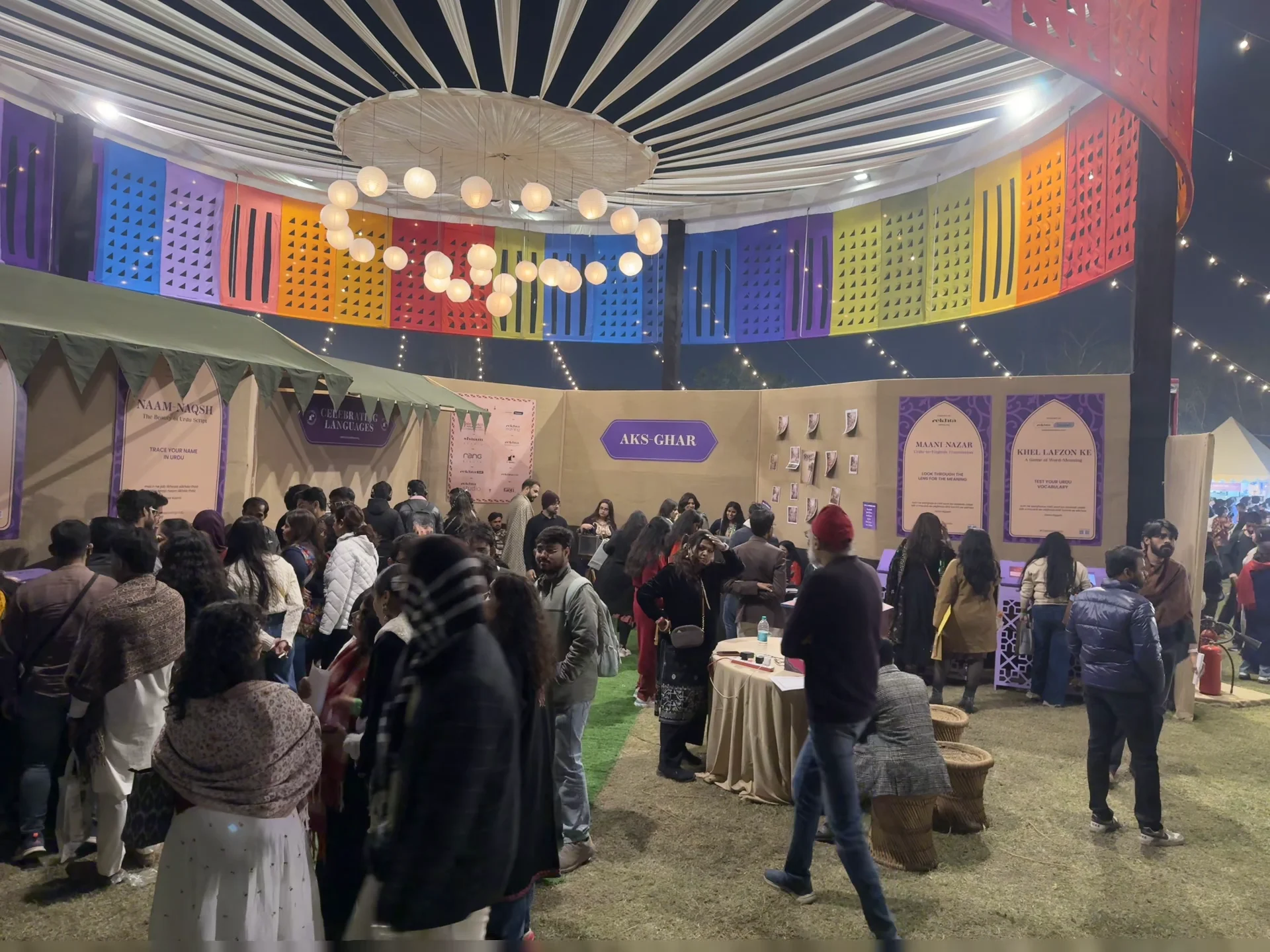 After dark
Step inside the pavilion. Select any image to explore the experience.
The invitation
At a festival filled with music, poetry and conversation, the pavilion offers a different way to engage: through a small act of participation.
Familiar objects become invitations. A telephone leads to a poet’s voice. A writing surface introduces the curves of Urdu script. A camera creates a reason to pause and make a memory.
The exhibits
Each exhibit offers its own way into language and culture. Visitors can take a quick look, try something new or settle in for a longer encounter.
Make the script personal.
Visitors trace their name in Urdu on paper over an illuminated surface. Letterforms become something to follow by hand and take away.
Look through the lens.
An Urdu-to-English translation exhibit invites visitors to discover meanings through a lens, making the act of looking part of understanding.
Play with words.
A vocabulary game gives visitors a playful way to test their familiarity with Urdu words and discover more of the language.
Make a festival portrait.
A bellows camera on a wooden tripod anchors a portrait station, with a seating area and a wall of photographs framing the encounter.
Give poetry a call.
Inside a red telephone booth, a directory pairs poets with numbers to dial. The telephone becomes a personal listening point.
Lean in to discover.
A colourful viewing box offers individual peepholes around its sides. The familiar gesture of peering inside turns viewing into a physical interaction.
Pause, watch and listen.
An angled screen and multiple headphones create a shared viewing station, giving visitors space to listen within the bustle of the festival.
One connected experience
The pavilion brings physical objects, screens, sound and exhibit interfaces into one visitor journey. Its character comes from the variety of encounters: writing, listening, looking, playing and posing.
From the purple stations to the vintage camera and telephone, each interaction has a recognisable point of entry. Together, they make a space for individual discovery and shared conversation.
Built at Tilism
Talk to us about interactive exhibits and installations that bring stories, spaces and audiences together.
Discuss a similar project